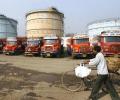
When oil prices collapse from $110 to $45, economic agents in India experience a large income windfall.
Four specific areas will be watched carefully in the first half of FY16

RBI governor Raghuram Rajan is likely to cut rates in next monetary policy.

Things are expected to change dramatically in a few years for urban consumers.

The Finance Minsiter says country requires 'a larger opening out in more sectors, stability of policy and tax regime'

I-T lens on current account deposits over Rs 12.5 lakh. All the news and more post demonetisation.
Joydeep Ghosh takes stock of personal finances after the life-altering surprises of 2016.

India's gold imports could pick up in the next few months after slumping 81 percent in June as falling prices spur buying, a government source said, adding to New Delhi's anxiety over a record-low rupee and a wide current account deficit.

With Pockets, ICICI Bank aims to target first-time customers.

The Budget decides to take the lead in revving up infrastructure.

Raja Sen takes stock of Best Director nominees at Oscars 2015.

Against a turbulent and uncertain background, Budget 2017-18 hewed a steady, forward-looking course, says Shankar Acharya, former chief economic adviser to the government.

In an interview to Business Standard, Rangarajan says CAD will be brought under control at around two per cent of the gross domestic product.

The company is to act as an ISP across rural areas for local entrepreneurs.

If oil prices stay at their new level of $72 or drop further, India will be in the happy position next year of enjoying a surplus on the trade account.

Mr Jaitley should devise methods to attract better talents at the higher level.
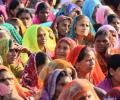
The argument that there is nothing wrong in barring illiterates from contesting elections is extremely flawed, when by the same yardstick many sitting MLAs and MPs would not be eligible to contest even panchayat polls, says Devanik Saha.

The railways is expecting a revenue of Rs 1,84,820 crore during the current financial year (FY17).

Other large recipients are China ($64 billion), the Philippines ($28 billion), Mexico ($24 billion), Nigeria ($21 billion), Egypt ($18 billion), Pakistan ($17 billion), Bangladesh ($15 billion), Vietnam ($11 billion) and Ukraine ($9 billion).

India has undertaken a number of structural reforms.

While Manmohan Singh had to deal with high oil prices, inflation and trade deficit, Narendra Modi is lucky as major threats have receded, says T N Ninan.

'Fear is also a great impetus to push people in the right direction.' 'So, everyone who has touched black money is scared and I'm very happy about it.'
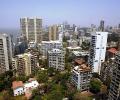
It, however, lags other states on crucial parameters such as health care and rural poverty.

'It has a natural inclination to foster as much competition among civilian politicians as possible.'

The obvious temptation for Mr Jaitley would be to achieve a better fiscal deficit figure than what he had promised in July.

Lee Hsien Loong's splendid victory in Singapore could be India's gain.

These are companies with a strong track record and good prospects on earnings.

Softening the demonetisation blow, the Budget for 2017-18 on Wednesday halved the tax to 5 per cent on incomes up to Rs 500,000 but proposed a new surcharge of 10 per cent on incomes between Rs 50 lakh and Rs 1 crore and raised duties on cigarettes and pan masala while stepping up allocations for infrastructure, rural, agriculture and social sectors.
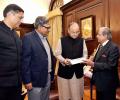
Finance Minister Arun Jaitley should not drop the ball on continuing the battle against black money and move towards digital transactions to reduce the preponderance of cash in the economy, says A K Bhattacharya.

The world seems to have caught severe pneumonia, or worse, as China had flu.
.jpg)
The minister also promised more policy decisions in the coming days saying 'reforms is a work in progress'.

Slowdown persists in China. India's GDP estimates for 2015-16 are liable to be pared; projections for 2016-17 are lacklustre.
Many countries advised the return the high-denomination notes to the central bank for destruction, but these continued to be legal tender. This and the introduction of a new Rs 2,000 note in India are the two major differences between Indian demonetisation and those of other countries.

From Kudankulam to the Land Bill, the author takes the Twitter route to capture the infra action of 2013.

The more market driven the economy becomes, the more its government sector should function in its basics like the rest of the economy.
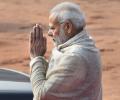
Prime Minister Narendra Modi on range of issues -- from Rafale deal to Ram temple and triple talaq.
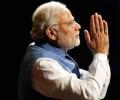
From lack of big reforms to regressive tax policies, the Modi govt has surrendered its initial momentum, says Shishir Asthana.
.jpg)
The rupee tumbled past 63.00 to the dollar, down about 2 per cent on the day and breaching the previous low of 62.03 hit on Friday despite a spate of measures in recent weeks by the central bank and government to defend it.

The passage of the Bankruptcy Code could set the stage for other important legislation that may see India undergo more economic change than all governments combined since the reforms implemented by P V Narasimha Rao in 1991-93, says Ben Merton.
The Indian economy can grow if it is delinked from the slow growth in the West and the deceleration in China, says Ashok K Lahiri.
 © 2026 Rediff.com - Advertise with us - Disclaimer - Privacy Policy - Sitemap - Feedback - About us - Terms of use - Grievances